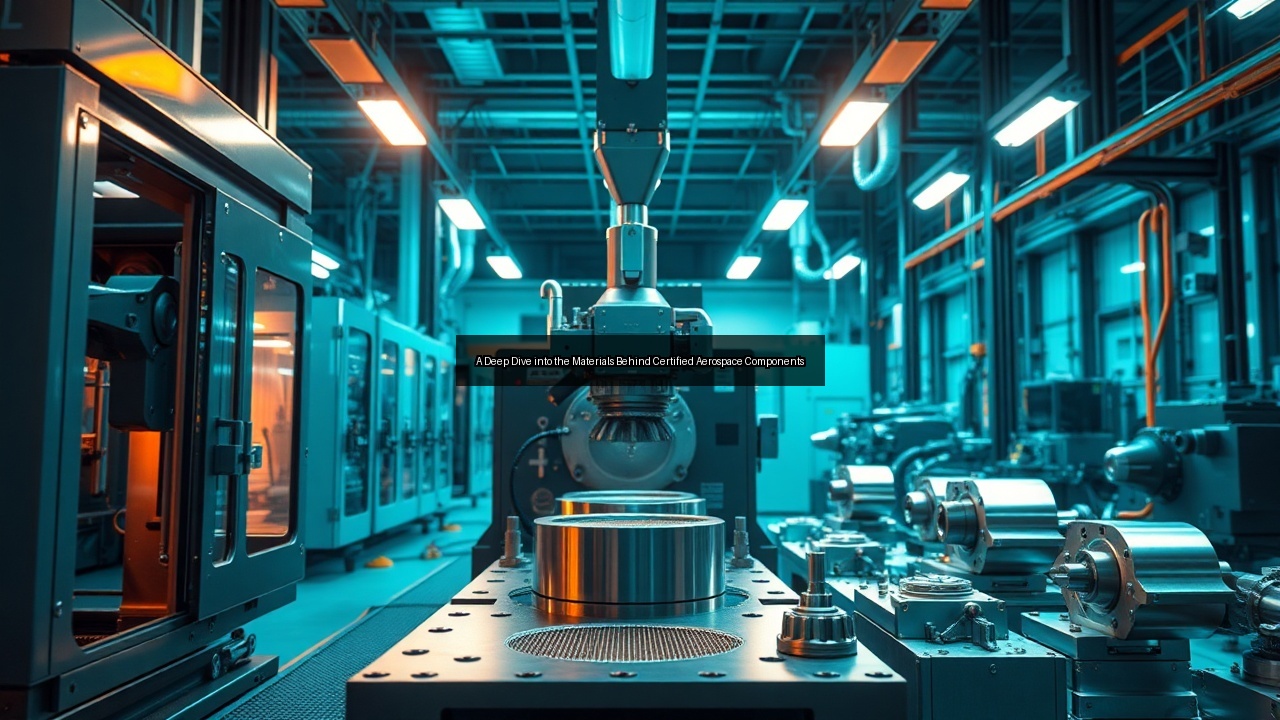
A Deep Dive into the Materials Behind Certified Aerospace Components
Understanding Certified Aerospace Components
Overview of Aerospace Components
Aerospace components form the backbone of every aircraft and spacecraft, ranging from structural frames to critical valves and instrumentation systems. Manufacturers design these parts to withstand extreme conditions while maintaining exact performance levels. Precision components undergo rigorous fabrication processes that include machining and welding to meet strict engineering requirements. Aerospace engineers rely on these elements to ensure safety and efficiency in flight operations. The demand for certified aerospace precision components continues to grow as commercial and defense programs expand their fleets.
Components must integrate seamlessly into larger assemblies such as engines, landing gear, and control surfaces. Each piece contributes directly to overall aircraft weight reduction and fuel economy goals. Traceability systems track every material batch from raw stock through final inspection. This level of detail prevents failures that could compromise missions or passenger safety. Aerospace manufacturing facilities produce thousands of unique parts annually to support global supply chain needs.
Importance of Certification in the Aerospace Industry
Certification validates that aerospace components meet performance and safety benchmarks established by regulatory bodies. Without proper certification, manufacturers cannot supply parts to major aircraft builders or defense contractors. Certified aerospace precision components reduce liability risks and support long-term reliability in demanding environments. The process confirms that every tolerance holds during operation and that materials resist fatigue and corrosion over extended service life.
Customers gain confidence when they know suppliers follow documented quality standards. Certification also opens doors to international contracts that require compliance with specific protocols. Aerospace industry leaders prioritize certified sources because non-compliant parts can ground entire fleets. This emphasis drives continuous improvement across fabrication and assembly lines. Ultimately, certification protects both operators and end users from potential catastrophic events.
Key Certifications: AS9100, ISO 9001, and NADCAP
AS9100 builds on ISO 9001 by adding aerospace-specific requirements for risk management and configuration control. Companies that achieve this certification demonstrate advanced quality management systems tailored to aircraft parts production. NADCAP accreditation focuses on special processes such as heat treating, welding, and non-destructive testing. These certifications together verify that precision machining operations deliver consistent results within tight manufacturing tolerances.
Suppliers holding all three credentials often receive preference in competitive bids. The combination signals robust traceability practices and thorough inspection protocols throughout the supply chain. Aerospace manufacturers invest significant resources to maintain these statuses because they directly influence contract awards. Regular audits ensure ongoing adherence to evolving industry expectations. This framework supports the delivery of reliable aero components that perform under extreme loads and temperatures.
Materials Used in Aerospace Manufacturing
Common Alloys in Aerospace Applications
High-strength alloys such as aluminum 7075 and 6061 dominate many structural aerospace components. These materials offer excellent strength-to-weight ratios while resisting cracking under cyclic loads. Manufacturers machine them into brackets, fittings, and housings that form essential aircraft parts. Alloy selection depends on the specific mechanical and thermal demands of each application. Engineers evaluate corrosion resistance and fatigue life before approving any material for flight hardware.
Nickel-based superalloys appear in turbine blades and exhaust systems where temperatures exceed 1000 degrees Celsius. These alloys maintain mechanical properties at levels where other metals would fail. Precision machining of such materials requires specialized tooling and controlled environments to achieve required tolerances. Quality control teams verify chemical composition and mechanical properties through extensive testing. The result supports engines that deliver reliable thrust across thousands of flight hours.
The Role of Composites in Aircraft Parts
Carbon fiber reinforced polymers reduce weight in wings, fuselages, and interior structures. Composites provide high stiffness and strength while allowing complex shapes that metal fabrication cannot easily achieve. Aerospace manufacturing increasingly incorporates these materials to improve fuel efficiency and payload capacity. Layup processes followed by curing under pressure create parts with tailored fiber orientations for optimal load paths.
Inspection methods such as ultrasonic testing confirm internal integrity after fabrication. Composites also resist fatigue better than many metallic alternatives in certain applications. Manufacturers must control moisture absorption and impact damage through careful design and surface treatments. The integration of composites with metallic aerospace components demands precise mating surfaces and fastener strategies. This hybrid approach delivers both performance gains and long-term durability for modern aircraft.
Benefits of Titanium in Aerospace Components
Titanium alloys combine low density with outstanding corrosion resistance and high-temperature strength. Aerospace engineers specify titanium for landing gear, fasteners, and engine mounts where weight savings matter most. The material withstands aggressive environments that would degrade aluminum or steel parts. Precision machining of titanium requires coolant strategies and cutting parameters that prevent work hardening and tool wear.
Suppliers who provide certified aerospace precision components frequently stock titanium grades approved for flight use. Traceability documentation accompanies every plate and bar to satisfy regulatory audits. Titanium also offers excellent compatibility with composites, reducing galvanic corrosion risks in mixed-material assemblies. Its high cost is offset by reduced maintenance and extended service intervals. Aerospace manufacturing continues to expand titanium applications as processing techniques improve efficiency.
Precision Machining and Manufacturing Tolerances
Overview of Precision Machining Processes
Precision machining removes material from raw stock to create finished aerospace components with micron-level accuracy. Multi-axis CNC mills and lathes produce complex geometries in a single setup, minimizing errors from repeated fixturing. Aerospace manufacturing relies on these capabilities to create valves, actuators, and instrumentation housings that fit exact design specifications. Tool path optimization and in-process probing maintain dimensional stability throughout production runs.
Advanced software simulates cutting forces and thermal effects before any metal is removed. This proactive approach prevents scrap and ensures each part meets certification requirements. Machining centers equipped with automatic tool changers support high-mix, low-volume production typical of the aerospace industry. Operators monitor vibration and spindle loads to protect both equipment and workpieces. The outcome is reliable components that integrate smoothly into larger systems.
Understanding Manufacturing Tolerances in Aerospace
Manufacturing tolerances define the allowable variation in dimensions and geometry for every aerospace component. Tight tolerances, often measured in thousandths of an inch, ensure proper fit and function under operational stresses. Aerospace engineers calculate tolerance stack-ups across assemblies to prevent interference or excessive play. Precision machining processes must hold these limits consistently from the first part to the last in any production lot.
Material properties and thermal expansion influence achievable tolerances during fabrication. Suppliers adjust process parameters and inspection frequencies accordingly. Exceeding tolerance limits can trigger rejection during quality assurance reviews and disrupt the supply chain. Documentation of achieved dimensions supports traceability requirements for certified parts. Maintaining control over tolerances directly impacts aircraft performance, safety margins, and certification validity.
Quality Control and Assurance in Machining
Quality control begins with incoming material verification and continues through every machining operation. In-process checks catch deviations before they become costly defects. Final inspection uses coordinate measuring machines and optical comparators to confirm all critical features fall within specified tolerances. Aerospace manufacturing facilities document every measurement to satisfy NADCAP and AS9100 audit requirements.
Statistical process control tracks variation trends and triggers corrective actions when needed. This data-driven method reduces scrap rates while improving overall yield. Quality assurance teams also validate fixturing and tooling setups before production starts. Continuous training keeps machinists current on best practices for new alloys and composites. Robust quality systems protect the integrity of certified aerospace precision components delivered to customers.
Quality Management Systems in Aerospace Manufacturing
Implementing Quality Management Systems (QMS)
Quality management systems provide the framework for consistent production of aerospace components. Implementation starts with documented procedures covering every step from design review to final shipment. AS9100 and ISO 9001 certifications require evidence that processes control variation and prevent nonconformances. Aerospace manufacturers train staff extensively on these procedures to embed quality into daily operations.
Internal audits identify gaps before external assessors arrive. Corrective actions address root causes rather than symptoms alone. The QMS also incorporates customer-specific requirements that may exceed baseline standards. Effective systems link engineering changes directly to production updates, maintaining configuration control. This disciplined approach supports the reliable delivery of precision components that meet all regulatory expectations.
The Role of Quality Control in the Supply Chain
Quality control extends beyond a single facility to encompass the entire aerospace supply chain. Prime contractors flow down requirements to tier suppliers, ensuring every subcomponent meets the same rigorous standards. Incoming inspection verifies that purchased parts satisfy drawing requirements before they enter production. This layered approach prevents defects from propagating through assemblies.
Suppliers who provide certified aerospace precision components maintain their own robust quality systems to support these demands. Real-time data sharing between partners enables rapid response to any quality issues. Traceability records link raw material heats to finished parts across multiple organizations. Strong supply chain quality control ultimately reduces program risk and supports on-time aircraft deliveries.
Traceability and Inspection Methods for Aerospace Components
Traceability systems record every material lot, process step, and inspection result associated with an aerospace component. Serialization and barcoding enable retrieval of complete histories within seconds during audits or investigations. Inspection methods include dimensional checks, surface finish analysis, and non-destructive testing such as eddy current and X-ray. These techniques confirm that parts meet all specified quality standards before release.
ITAR compliance adds further restrictions on data handling and personnel access for defense-related components. Manufacturers integrate digital records with physical part markings to maintain unbroken chains of custody. This level of traceability supports failure analysis and continuous improvement initiatives. Customers gain assurance that every certified aerospace precision component carries verified documentation from raw material through final acceptance.
Emerging Technologies and Trends in Aerospace Components

Advancements in Actuators and Sensors
Modern actuators deliver precise motion control for flight surfaces, landing gear, and engine systems. Integrated sensors provide real-time feedback on position, force, and temperature. Aerospace manufacturing now embeds these smart devices directly into structural aerospace components to reduce wiring weight and improve response times. Miniaturization allows placement in previously inaccessible locations within aircraft parts.
Advanced materials and additive manufacturing enable actuator housings with internal cooling channels and optimized geometries. Calibration and testing occur under simulated flight conditions to verify performance across temperature and vibration ranges. These advancements support more electric aircraft architectures that replace hydraulic systems with lighter alternatives. Suppliers continue refining designs to meet increasing demands for reliability and diagnostics.
The Impact of EMI and RF in Aerospace Engineering
Electromagnetic interference and radio frequency emissions can disrupt avionics and communication systems if left uncontrolled. Aerospace engineers incorporate shielding, filtering, and grounding strategies into component designs to mitigate these effects. Precision machining creates tight-fitting enclosures that maintain electrical continuity while meeting weight targets. Testing in anechoic chambers validates that finished parts meet emission and susceptibility requirements.
RF management extends to wiring harnesses and instrumentation interfaces throughout the aircraft. Materials with specific conductivity and permeability properties help contain fields within designated zones. Compliance documentation forms part of the certification package for every new component. Ongoing research addresses higher frequency bands used in next-generation communication and radar systems. Effective EMI and RF control remains essential for safe and reliable aircraft operation.
Vibration Isolation Techniques in Aerospace Design
Vibration isolation protects sensitive instrumentation and extends the fatigue life of structural aerospace components. Engineers employ elastomeric mounts, tuned mass dampers, and active cancellation systems to reduce transmitted energy. Precision machining produces the mounting interfaces that ensure consistent performance of these isolation elements. Testing on shaker tables confirms that assemblies withstand the full spectrum of expected flight vibrations.
Composite materials with tailored damping properties supplement traditional metallic solutions in many applications. Isolation design must balance weight, stiffness, and thermal expansion considerations across operating temperature ranges. Aerospace manufacturing integrates isolation features early in the component development cycle to avoid costly redesigns later. These techniques contribute directly to passenger comfort, equipment longevity, and overall mission success in both commercial and military platforms. All rights reserved.